







Katrina's progress with learning mathematics
Katrina is 10 years old and has Down syndrome. She is making good progress with learning and numbers and mathematics. We describe how Katrina has learned number concepts and arithmetic skills over several years. We highlight the influence of early learning habits, visual supports, motivation and practice, and the uses made of different number teaching schemes.
McConnochie, J, and Sneath, G. (2007) Katrina's progress with learning mathematics. Down Syndrome Research and Practice, 12(1), 34-37. doi:10.3104/practice.2014
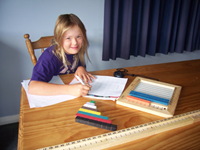
Figure 1 | Katrina completing mathematics exercises.
We are amazed to see how well our 10 year old daughter with Down syndrome is doing with her mathematics. Yesterday, when her dad came home, Katrina was able to tell him why 5/4 and 9/8 were improper fractions and she could sit down with her Stern fraction pieces and work out what they were as mixed numbers (1¼ and 1⅛). Looking back, it's very interesting to see what the steps were that helped her to arrive at this point. Like the bike riding [1] it seemed to be a distant and impossible goal for a long time (years) and then suddenly it all seemed to come together.
Many years of practising mathematical skills such as addition, subtraction, multiplication and division have helped Katrina reach the stage that processes such as long multiplication and long subtraction are becoming so automatic that Katrina doesn't even have to consciously think about them. We believe that in this way the processing power that is available to Katrina can be concentrated on other aspects of maths such as problem solving. As an analogy, it is easier to understand the meaning of text if you don't have to sound out the words while you are reading.
Learning habits
We have lived a transient life and in quite a few of the schools we have been to, teachers have commented that Katrina works harder and more consistently than any other child in the class. We think a lot of that can be traced back to the habits and expectations set by pre-school early education classes attended at The Sarah Duffen Centre and by Portage services. Katrina has never really known any different and for the most part she does seem happy to sit down and finish her set tasks, particularly if she feels she is successful. These good learning habits have been invaluable.
Glossary
Stern Structural Arithmetic
A programme for learning number concepts that is based on reasoning and insight into mathematical relationships, rather than rote learning and counting.
Portage
A home-visiting educational service for pre-school children with additional support needs and their families. First developed in Portage, Wisconsin, USA in the early 1970s, the service is now widely available across the UK.
Kumon
A teaching programme that emphasises a step-by-step approach, building on success and learning through practice.
Numicon
A multi-sensory approach to arithmetic teaching that uses patterns that are structured to encourage the understanding of number and number relationships.
Early counting
We started with early counting up to 20 at pre-school, age 3. Our biggest hurdles have been achieving number bonds and then times tables. Once this foundation was in place everything else has followed more easily.
Number 'shapes'
Looking back at her progress in maths, Katrina started Kumon in 2001, aged 5, but stopped again because of the time it took. Initially, she really found the dot patterns of the teen numbers impossible to correctly identify. It was about that time that we started to use Numicon more consistently with the pattern shapes to learn odd and even, and to learn the addition of numbers to 10. At that time, using Numicon we also introduced 'doubles' and 2 times tables, which Katrina seemed to learn. Her sister was a good role model, as she was also learning her times tables. Katrina's school was pleased with Numicon using it to support school numeracy classes and to demonstrate some of the confusing language of maths (e.g. minus, subtract and difference).
Practice and persistence
In 2003, when Katrina was 7, we started Kumon again. This time it was far more successful because Katrina had developed a lot of confidence using the Numicon templates to support her number bonds. We were very lucky that we had Marie Gibb's Andover Kumon class nearby. Marie is very dedicated to all her pupils and also very flexible and supportive. I think Katrina enjoyed going along to Kumon classes - certainly she enjoyed the fabulous Kumon reward days, when the children could exchange their earned Kumon stickers for sweets. Kumon practice on number bonds to 10, then eventually to 20, continued every day for years. When we left the UK, Marie allowed us to continue by correspondence still with quite detailed support. (Marie even posted the sweets on the reward days!) Looking back, Katrina was doing at least 100 number bonds every day for about 3 years. Even in Marie's Kumon classes, Numicon supported each new stage of progress until Katrina developed the confidence to succeed without the props. As with Numicon or Stern Maths, a key factor in Kumon was the structure it provided, making gradual steps forward by consolidating from a baseline level where Katrina could be successful. Most of all it gave us an appreciation of the progress that can be made when maths is practised for a short amount of time every day. At every stage the biggest single obstacle has been when Katrina will not try because she feels something is too difficult for her. The structure also gave us the confidence to patiently persevere.
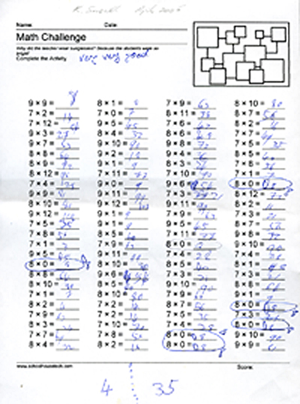
Figure 2 | Example completed mathematics exercises. Further examples are available in SUPPLEMENTARY ONLINE FIGURES.
Five times tables were introduced along with Vikki Horner's 'Charlotte' clock in 2003. Soon after some of the other times tables were introduced as well. We had some limited success with the tables, however they were all quickly forgotten again. We maintained our focus on number bonds to 20 (and subtractions) with the Kumon practice every day.
We continued by correspondence with Marie Gibb right up until 2005. We could no longer afford Kumon, but with the very strong foundation in the principles of Kumon and the established daily routines for practice, it was a successful transition when Katrina's mum found several web sites which allowed us to start printing off our own series of worksheets. [2, 3]
We are quite convinced that the daily practice with Kumon was essential. It probably helped that Katrina could see that her brother and sister and other children had to do their Kumon as well (it worked well for them also).
Multiplication tables
Then, over Christmas 2005, there was a concerted effort on times tables. The holiday was 6 weeks long and each week one or two sets of times tables were concentrated on, starting with 2x and 5x tables because Katrina had some previous confidence with them. The times tables were demonstrated using Stern materials, and also with the ever popular raisins (which could be eaten) and then lots of written examples using the printouts from the web pages.
Success and speed
All last year Katrina practised several hundred maths examples every day before breakfast in order to allow her to pass the weekly maths tests at school (addition, subtraction, multiplication and division). To pass each level and move on to the next, the children had to be able to answer 60 questions correctly in 4 minutes. Because of her daily practice, Katrina managed relatively well and was able to move on to a new level most weeks. Kumon principles insist on improving your personal times, and seeing her 'time score' remains an important motivation and reward - as does the declaration of 'now 100%' after completing corrections (no matter how many corrections there are). On the example work sheets you can see the times that Katrina has recorded for each page, 4 minutes 35 seconds, 3:06 etc. This daily practice has led to the stage where Katrina is now very confident (and very quick) with multiplication and division up to the 12 times tables and addition and subtraction number bonds up to 20.
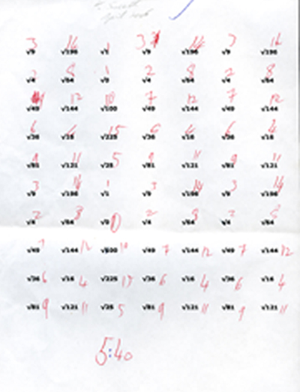
Figure 3 | Example completed mathematics exercises. Further examples are available in SUPPLEMENTARY ONLINE FIGURES.
Small steps and visual support
Having confidence in number bonds and times tables has recently brought other maths operations within her grasp. Squares and square roots were in the Year 6 tests and have been introduced with quite good success, as have long addition / subtraction and long multiplication. We found the Stern number board particularly useful for teaching long addition and subtraction. This visual prop makes it obvious to children why it is necessary to carry and rename tens when adding and subtracting larger numbers.
Katrina couldn't do it at all without the practical, visual props at each new stage of progress. We used Numicon to start with and Stern materials when they became available later on. There have been lots of ups and downs and periods of going backwards and periods of thinking we weren't making much progress, but gradually Katrina developed speed and confidence with the daily practice over several years.
We have found it is extremely important to break each mathematical process down into very small steps to ensure constant success for Katrina. For example in long multiplication, Katrina spent several weeks becoming very quick at long multiplication using single digit numbers (e.g. 972 x 7) before we introduced two digits (e.g. 972 x 17). We have recently introduced long division using the Stern materials and games. Once Katrina developed a good understanding with the concrete material we have started to introduce pages and pages of written practice of simple divisions with remainders e.g.
4 r 3
5 | 23
20
3
Vocabulary
Racing the clock is a great motivator. It also provides a measure of when Katrina has become proficient enough to ensure that the long division method has become automatic (this will make it easier to move on to more difficult calculations). It is equally important, we believe, to teach Katrina all the correct terms for each aspect of mathematics e.g. numerator, denominator, remainder, quotient etc. Recently when Katrina was practicing simple long division, we heard her say for each example "and the quotient is …" It seemed that having a label for each of the terms helped her remember each step that she needed to take.
"It seemed that having a label for each of the terms helped her remember each step that she needed to take"
Katrina's mum has been very methodical and analytical in her approach to selecting the maths targets, particularly when doing Kumon by correspondence. She and Marie exchanged ideas, thoughts and recommendations about when to go back and consolidate and when to move up a level. But equally, I think the process has been made much easier by the good habits and work skills that were introduced during the pre-school years.
Further information
Kumon Australia and New Zealand
Kumon España https://www.kumon.es/
Kumon Deutschland https://www.kumon.de/
Kumon North America https://www.kumon.com/
Kumon UK and Ireland https://www.kumon.co.uk/
National Portage Association (UK)
Maths Extra https://www.mathsextra.com/
Numicon https://www.numicon.co.uk/
Stern Structural Arithmetic https://www.sternmath.com/
Maths skills in everyday life
We have not spent much time on problem solving and Katrina still needs a lot more practice in applying the mathematical skills she has to real-life situations. However, over the last few months with her improved competency in the times tables and number bonds we have noticed Katrina effortlessly using these skills in simple daily tasks, such as calculating hours remaining on the clock, how many places to set at the table when we have visitors, dividing up chocolates and sweets and also in working out the amount of change she should get for simple transactions.
"Now she participates happily in family board games and some card games on an equal, independent basis"
From 2003 onwards, games were fairly slow and tedious, as we helped Katrina work out the score in simple card games, or add the numbers on the dice. Now she participates happily in family board games and some card games on an equal, independent basis. Indeed, Katrina takes a lot of pride and enjoyment in keeping the score for many different games and, as is the case for all of us, there is that much more fun and enjoyment when she feels she is successful.
References
- Sneat h G. Learning to ride a bicycle. Down Syndrome News and Update. 2003;3(3):94-95. doi:10.3104/practice/244.
- Miller M. Free math worksheets. Homeschool Math. [Online] 2007 [cited 2007 Feb 12]. Available from: https://www.homeschoolmath.net/worksheets/
- Schoolhouse Techn ologies. Basic facts worksheet factory. [Electronic Download]. Seattle, WA, USA: Schoolhouse Technologies; 2007 [cited 2007 Feb 12]. Available from: https://www.schoolhousetech.com/products/basicfacts/
Received: 1 February 2007; Accepted 14 February 2007; Published online: 30 July 2007.