uk and international | usa | international shop | usa store | in touch | down syndrome online | see and learn | more sites...
In order to see this content you need to have both Javascript enabled and Flash installed. If you're reading via RSS, you'll need to visit the blog to access this content. .

New on Down Syndrome Online

Overview books on motor and social skills available online

Two more books on social skills and motor skills from DownsEd's authoritative Down Syndrome Issues and Information education series are now available for free online on Down Syndrome Online. The... Read more...

Number and mathematics books now available for free online

Three books on number skills development for children with Down syndrome from birth through teenage years are now available for free online on Down Syndrome Online. These books are from... Read more...

Books on speech and language now available for free online

Three books on speech and language development for children with Down syndrome from birth through teenage years are now available for free online on Down Syndrome Online. These books are... Read more...

Down Sydrome Online's open access policy praised by The Institute for Research and Innovation in Social Services

The Institute for Research and Innovation in Social Services has praised Downsed's websites for providing open access to "a mass of material that will enrich the learning of anyone interested... Read more...

The use of Ginkgo, Prozac and Focalin as a "treatment" for Down syndrome

A combination of drugs recommended for depression and attention deficit and hyperactivity disorder is being widely promoted as a "treatment" for Down syndrome. There is no scientific support for the... Read more...

Memory and learning – using mouse to model neurobiological and behavioural aspects of Down syndrome and assess pharmacotherapeutics

This paper by Katheleen Gardiner reviews the challenges inherent in using mouse models in Down syndrome research and then describes the successful molecular/genetic interventions that are cause for cautious optimism.... Read more...

Teaching spontaneous responses to a young child with Down syndrome

Spontaneity is an area of expressive language in children with Down syndrome that has received little attention in the literature. Nonverbal stimuli to which children emit spontaneous utterances do not... Read more...

Folate metabolism and the risk of Down syndrome

Folate is an important vitamin that contributes to cell division and growth and is therefore of particular importance during infancy and pregnancy. Folate deficiency has been associated with slowed growth,... Read more...

Modelling Down syndrome

Animal models are extensively used in genetics, neuroscience and biomedical research. In this article, Frank Buckley describves recent studies that illustrate the usefulness and the challenges of research utilising genetically... Read more...

The power of behavioural approaches – we need a revivial

Behavioural approaches can be used very effectively to teach new skills and to change behaviours that are challenging and not socially adaptive. In this article, Sue Buckley darws on several... Read more...

It is time to take memory training seriously

It has been known for a long while that children with Down syndrome have specific impairments in verbal shortterm memory. In this Update article, Sue Buckley describes research that indicates... Read more...

Special at school but lonely at home: An alternative friendship group for adolescents with Down syndrome

After a decade of inclusion and structured school programmes to facilitate friendships, many parents report that peer relationships end after school hours. In this article, Jeanne D'Haem summarises the results... Read more...

Handling the transfer to secondary school

The transfer from primary to secondary education can be an anxious time and planning ahead can help. This article by teacher Elaine Bull offers practical advice about what to consider,... Read more...

Review of Singing Hands CD resources

A review by Julie Hughes of the Singing Hands Book of Songs and Song Time CD, Volumes 1 & 2. Full review available at: www.down-syndrome.org/resources/2082 Read more...

Review of activities for babies with Down syndrome video

This article by Sue Sillitoe, first published in Nursery World magazine, reviews the Development in practice - Activities for babies with Down syndrome DVD video published by Down Syndrome Education... Read more...

Down Syndrome Online offers comprehensive information about Down syndrome, including articles, books and scientific papers.

Down Syndrome Online is published by Down Syndrome Education International, a leading research and information organisation. Publications currently available include:

New information is regularly added. Subscribe to our New on Down Syndrome Online news feed and sign up to our email news to stay up to date.


Recent highlights and features

Learning to learn

Photograph of a childAspects of short and long-term memory can present challenges for people with Down syndrome. Some of these impact language development and many other aspects of learning.

To what extent can we do something about these difficulties? Can practice improve memory abilities? Past research suggests it is possible. What further research is needed?

In the archives:


Reading

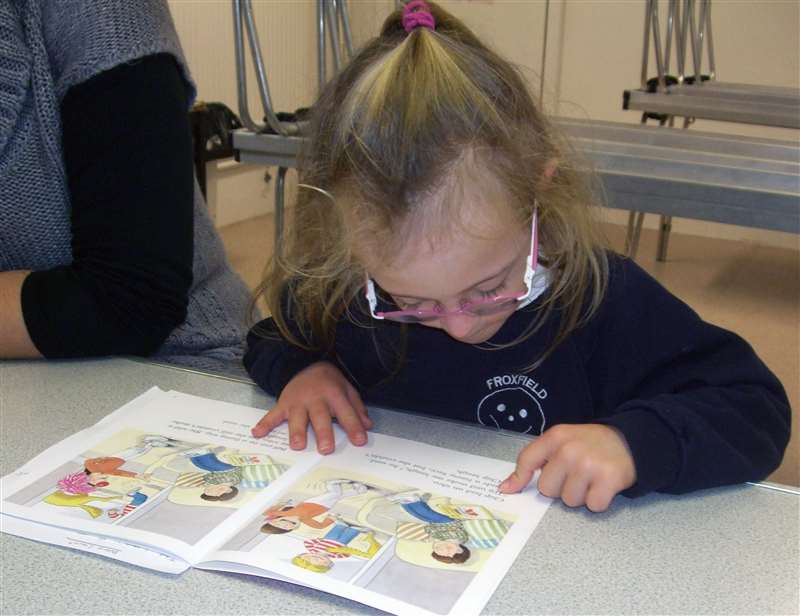
Photograph of a childReading is often a relative strength for young people who have Down syndrome. Early reading can provide a useful support for early language development.

Young people with Down syndrome are increasingly gaining useful reading skills. Some are achieving age-typical reading skills. What accounts for wide variations in progress? What further research is needed to identify the most effective ways of teaching reading?


'Smart' mice

Photograph of a mouseMice that carry additional copies of genes comparable to some of those present on human chromosome 21 have been shown to perform better on memory tests when treated with drugs that target brain function. Could this be an important breakthrough?

What are these genetically engineered mice and how do they help us understand the condition experienced by humans who have Down syndrome?


Folate metabolism

It has been suggested that certain versions of some genes can increase the risk of conceiving a baby with Down syndrome. If this is the case, then people who have Down syndrome may be more likely to carry these versions of these genes and perhaps experience associated problems in folate metabolism. Studies to date have found conflicting results, suggesting that these gene variants may be part of a more complex picture.


The costs of genetic screening policies

Photograph of a childDespite the wide availability of prenatal genetic screening and terminations, the rate at which babies who have Down syndrome are being born is rising in England and Wales. Meanwhile, many babies that do not have Down syndrome are lost following invasive testing.

An editorial in Down Syndrome Research and Practice presents an analysis of national registry data and the issues raised by genetic screening in practice. It is accompanied by a essay describing a mothers' experiences of prenatal testing.


Seeing numbers

Photograph of a child working with Numicon shapesUnderstanding number concepts and basic mathematical skills is important for many everyday activities in modern societies. Little is understood about the numeracy abilities of people with Down syndrome. However, some teaching approaches that seek to utilise certain relative strengths to communicate number concepts seem to be useful in practice.